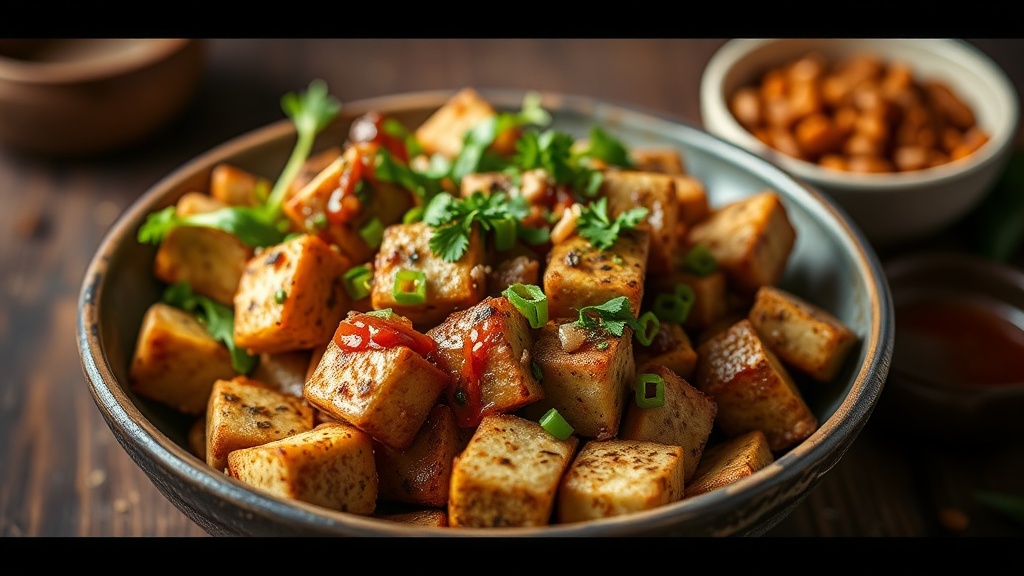
Building Better Plant-Based Marinades for Marinated Tofu and Tempeh

Learning to Build Flavors into Plant Proteins
This post covers how to construct deep, flavorful marinades specifically designed for firm tofu and tempeh. You'll learn the balance of acid, fat, salt, and aromatics required to penetrate dense plant-based proteins. Instead of relying on surface-level seasoning, we'll focus on the chemical and physical methods that ensure flavor reaches the center of your protein.
Many people struggle with plant-based proteins because they feel bland or, conversely, too salty on the outside. The problem usually isn't the protein itself; it's the lack of a structured marinade. A successful marinade needs to do more than just coat the surface. It needs to break down the structure slightly and carry flavor into the interior. Whether you're using extra-firm tofu or fermented tempeh, the approach changes based on the density and texture of the ingredient.
What is the difference between tofu and tempeh marinades?
Tofu is highly absorbent because it's essentially a sponge made of soy milk. It has a high water content, which means you have to be careful about how you prepare it before it touches the liquid. Tempeh, on the other hand, is a fermented product with a much more compact, fibrous structure. You can't just soak tempeh; you often need to help the flavors penetrate that tougher exterior.
For tofu, the first step is always moisture removal. If you don't press the water out, the oil and spices in your marinade will just sit on top of a thin film of water. I recommend pressing your tofu for at least 20 minutes—even 30 if you have the time. For tempeh, a quick steam or a light pan-fry before marinating can open up the pores. This makes the texture more receptive to the liquids you're about to introduce.
How do you balance acidity and salt in a marinade?
A common mistake is using too much salt or one-dimensional acids like plain white vinegar. A professional-grade marinade relies on a ratio. Think of it as a tripod: Acid, Salt, and Sweet. If you have a heavy acid like lemon juice, you need a bit of sweetness (like maple syrup or agave) to prevent it from tasting harsh. If you're using a fermented salt like soy sauce or tamari, you might need less supplemental salt altogether.
Here is a basic framework for a versatile marinade base:
- The Acid: Rice vinegar, apple cider vinegar, or fresh citrus juice.
- The Salt: Tamari, liquid aminos, or sea salt.
- The Fat: Toasted sesame oil, avocado oil, or even a bit of creamy tahini.
- The Aromatics: Grated ginger, minced garlic, or shallots.
If you want to check the nutritional profiles of the ingredients you're using, the Nutritionix database is a great resource for looking up specific soy product values. Understanding the macronutrients can help you decide if you need more fat or more acid in your specific batch.
Which ingredients make for the best flavor carriers?
Flavor is carried by two things: fat and heat. When you're making a marinade, you want ingredients that can actually travel. This is where spices like smoked paprika, cumin, or even a touch of gochugaru (Korean chili flakes) come in. However, spices are often hydrophobic—they don't dissolve in water easily. This is why adding an oil component is so important; the oil carries the spice particles into the crevices of the protein.
One trick I use is to bloom your spices in the oil component of the marinade before adding the liquids. This ensures the flavor is distributed throughout the entire mixture, not just sitting in clumps. If you're looking for more information on the chemical reactions of spices, the National Center for Biotechnology Information often hosts studies on the bioavailability of certain plant-based nutrients and spice compounds.
How long should you marinate plant proteins?
Time is your best friend, but it's a double-edged sword. For tofu, a minimum of 30 minutes is fine, but 4 to 6 hours in the refrigerator is the sweet spot. If you leave tofu in a highly acidic marinade for more than 12 hours, the texture can become unpleasantly mushy as the acid breaks down the protein structures too much. Tempeh is much hardier. It can handle a long soak, sometimes up to 24 hours, which helps soften the fermented nuttiness of the beans.
Always remember to store your proteins in a glass or BPA-free plastic container. Avoid metal containers if your marinade is highly acidic (like one with lots of lemon or vinegar), as the acid can react with the metal and leave a metallic aftertaste in your food. It's a small detail, but it makes a massive difference in the final flavor profile.
When you're ready to cook, don't just dump the whole marinade into the pan. Drain the excess liquid first. If you have too much liquid, the protein will steam rather than sear. You want that beautiful, golden-brown crust that comes from a high-heat sear in a bit of fresh oil. The marinade has already done its job of flavoring the inside; now, the heat will do the job of crisping the outside.
| Protein Type | Preparation Step | Ideal Marinade Time | Best Cooking Method |
|---|---|---|---|
| Extra Firm Tofu | Press for 20+ mins | 2-6 Hours | Pan-Sear or Bake |
| Tempeh | Light Steam | 6-24 Hours | Pan-Fry or Air-Fry |
| Smoked Tofu | No prep needed | 30 Mins | Grill or Bake |