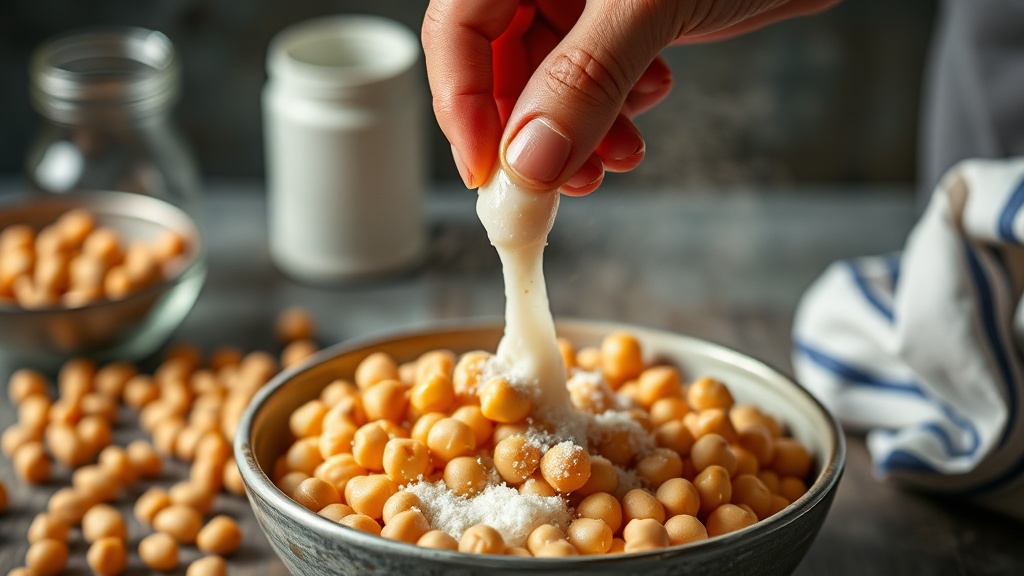
Don't Toss That Chickpea Liquid! Aquafaba Is Vegan Magic

Quick Tip
Three tablespoons of aquafaba equals approximately one egg white, and it whips into stiff peaks just like the real thing for meringues, mousses, and cocktails.
This post explains how to transform leftover chickpea liquid—called aquafaba—into a powerful vegan egg substitute for baking, cocktails, and desserts. You'll learn why this free byproduct belongs in every plant-based kitchen and how to whip it into creations that rival traditional recipes.
What Is Aquafaba and Where Does It Come From?
Aquafaba is the viscous liquid found in cans of chickpeas (or the cooking water from dried beans). That goopy stuff you'd normally pour down the drain? It's protein-rich and structurally similar to egg whites. The name comes from Latin—aqua (water) and faba (bean)—and it was "discovered" as a vegan egg replacement around 2015 by French chef Joël Roessel.
The liquid contains starches and soluble plant proteins that mimic how eggs bind, foam, and emulsify. You can use it straight from the can (unsalted varieties work best) or reduce it slightly for thicker applications.
Can Aquafaba Really Replace Eggs in Baking?
Yes—three tablespoons of aquafaba equals approximately one whole egg, while two tablespoons replace one egg white. Here's how it performs across common applications:
| Use Case | Ratio | Best For |
|---|---|---|
| Whole egg replacement | 3 tbsp aquafaba | Cakes, brownies, quick breads |
| Egg white replacement | 2 tbsp aquafaba | Meringues, macarons, marshmallows |
| Egg wash substitute | 2 tbsp + pinch of turmeric | Pie crusts, bread glazes |
| Cocktail foamer | 1-2 tbsp | Whiskey sours, pisco sours |
That said, aquafaba won't leaven like eggs in recipes relying heavily on egg structure—think angel food cake or soufflés. For those, you'll want to experiment or stick with trusted vegan-specific recipes.
How Do You Whip Aquafaba Into Meringue?
Drain a can of Eden Foods organic chickpeas and reserve the liquid. Beat it with a hand mixer or stand mixer (the KitchenAid Artisan works beautifully) for 3-5 minutes until stiff peaks form. Add cream of tartar—about 1/8 teaspoon per 2 tablespoons of liquid—to stabilize the foam faster.
The catch? It takes longer than egg whites. Don't give up. Keep beating. (Patience pays here.)
Once whipped, aquafaba meringue behaves identically to the egg-based version. Pipe it onto lemon tarts, torch it for baked Alaska, or fold it into mousses. Victoria's Fol Epi Bakery uses aquafaba meringue in their popular vegan macarons—proof that this technique delivers professional results.
What Does Aquafaba Taste Like?
Plain aquafaba has a faint bean flavor—mild but present. In finished dishes, you won't detect it. The neutral profile makes it more versatile than flax eggs (which taste earthy) or banana substitutes (which add sweetness).
Store leftover aquafaba in a sealed container in the fridge for up to a week, or freeze it in ice cube trays (each cube = about 1 tablespoon) for easy portioning. Brands like Ocean Spray have even experimented with packaged aquafaba, though most home cooks stick to the free stuff from canned beans.
Next time you open a can of chickpeas for hummus or curry, save that liquid. Your vegan baking—and your grocery budget—will thank you.