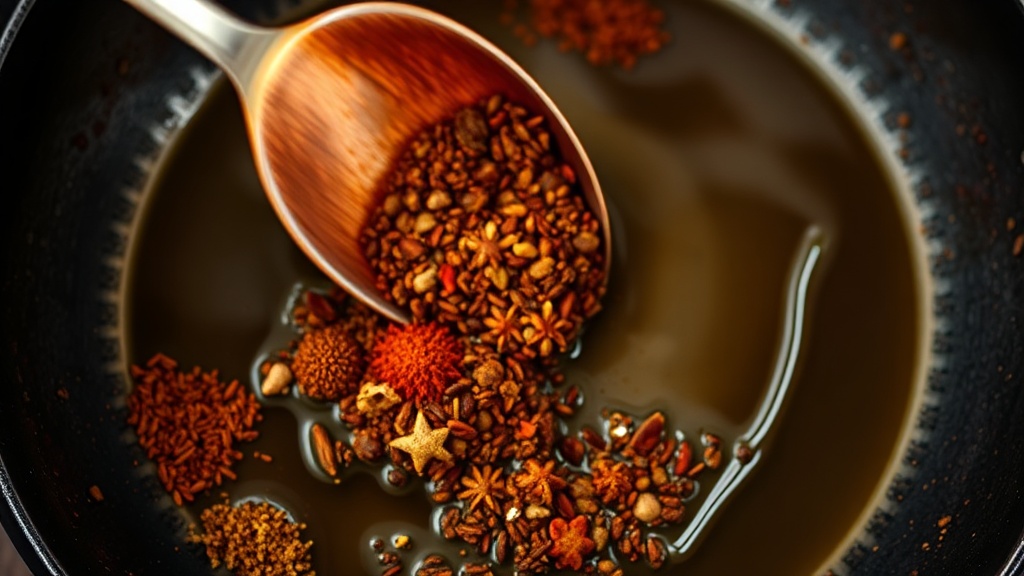
How to Temper Spices in Oil for Deeper, More Complex Curries

Most home cooks—even experienced ones—toast their spices dry in a skillet and call it done. That method works, sure, but it misses the full potential locked inside those seeds and pods. The ancient technique of tempering spices—known as tadka in Hindi, baghar in Urdu, and chaunk across South Asia—transforms ordinary spices into something far more fragrant, complex, and alive. You are not just warming spices. You are blooming their essential oils in hot fat, creating layers of flavor that water-based cooking simply cannot achieve.
Why Does Tempering Spices in Oil Taste Better Than Dry Toasting?
Flavor compounds in spices—particularly the aromatic ones—are fat-soluble. When cumin seeds, mustard seeds, or dried chilies hit hot oil, their cell walls rupture and release essential oils that dissolve into the fat. This carries those volatile aromatics throughout your entire dish rather than letting them evaporate into the air. Dry toasting activates some flavor compounds through the Maillard reaction, but it also drives off delicate aromatics before they ever reach your palate.
The difference is striking. Tempered cumin becomes earthy, warm, and slightly nutty with a haunting citrus backnote. Dry-toasted cumin can taste flat by comparison—pleasant, but one-dimensional. Mustard seeds popped in oil release an entirely different character than ground mustard ever could. That sharp, sinus-clearing heat? It only fully develops when the seeds crack open in hot fat, releasing myrosinase enzymes that create that distinctive pungency.
What Oil Should You Use for Tempering Spices?
Not all fats are equal here. You want oils with high smoke points that complement rather than compete with your spices. Ghee remains the gold standard in Indian cooking for good reason—it handles high heat beautifully and carries a subtle richness that rounds out sharp spice notes. For strictly vegan cooking, coconut oil (refined, not virgin, unless you want coconut flavor) works wonderfully, as does avocado oil or even peanut oil.
Avoid olive oil for high-heat tempering. Its smoke point is too low, and its fruity flavor profile clashes with most curry spices. Save it for finishing drizzles instead. The amount matters too—you need enough fat to coat your spices without drowning them. A tablespoon of oil for every teaspoon of whole spices hits the right balance.
How Hot Should the Oil Be Before Adding Spices?
This is where patience becomes your ally. Heat your oil until it shimmers—around 350°F if you are measuring—but not until it smokes. A single cumin seed tossed in should sizzle immediately upon contact. If it just sits there, the oil is too cool. If it burns within seconds, your oil is too hot and you have destroyed the very compounds you are trying to release.
The order of adding spices matters enormously. Hard, whole spices like cinnamon sticks, cloves, and cardamom pods go in first. They need the most time to release their flavors—about thirty seconds of gentle sizzling. Next come mustard seeds, cumin seeds, or fenugreek, which pop and splutter within ten to fifteen seconds. Dried chilies and curry leaves (if using fresh) go in last, as they burn quickly. The entire process takes under a minute once your oil is ready.
Can You Temper Spices Without a Special Pan?
Absolutely. A small stainless steel skillet or saucepan works perfectly. Some cooks prefer a traditional tadka pan—a small, long-handled vessel with a pouring spout—but it is not necessary. What you do need is a pan that heats evenly and responds quickly to temperature changes. Cast iron holds heat too stubbornly for this technique; by the time it cools enough to stop burning your spices, the moment has passed.
Non-stick pans are fine but unnecessary since you are using oil. The key feature is size—you want something small enough that your spices are not spread thin across a wide surface. They should cluster in the oil, bathing in it, not swimming lonely laps around a too-large pan. A six-inch skillet is ideal for home quantities.
What Do You Do With Tempered Spices Once They Are Ready?
You have two options, and both create different effects. The traditional method pours the entire contents—spices, oil, and all—over your finished dal, curry, or rice right before serving. This is called tadka dal when applied to lentils, and it creates an aromatic top note that hits your nose before the spoon reaches your mouth. Each bite carries a burst of spice-forward flavor.
The second method adds your tempered spices at the beginning of cooking, using the flavored oil as your cooking base. This integrates the spice flavors more thoroughly throughout the dish. They become background notes rather than highlights—subtle, pervasive, and deeply satisfying. Neither approach is wrong. They simply serve different purposes.
How Do You Keep Tempered Spices from Burning?
Burnt spices are bitter, acrid, and irredeemable. Prevention beats rescue every time. Keep your heat at medium—never high—once the oil reaches temperature. Have your next ingredients ready before you start tempering. The difference between perfectly bloomed cumin and burnt seeds is about five seconds. If you are adding onions, garlic, or ginger after your spices (a common technique), they should hit the pan immediately once the spices are fragrant.
If disaster strikes and you smell burning, discard everything and start fresh. There is no saving burnt spices, and their bitterness will permeate your entire dish. The good news? Spices are cheap, and the whole process takes under two minutes. Better to begin again than serve a compromised curry.
Which Spices Work Best for Tempering?
Whole spices reign supreme here. Ground spices burn almost instantly in hot oil and create muddy, bitter flavors. Stock your pantry with whole cumin seeds, brown or black mustard seeds, coriander seeds, fenugreek seeds, dried red chilies, and whole peppercorns. Fresh curry leaves—available at Indian grocery stores—add an incomparable citrus-herbaceous note when briefly fried in hot oil.
Experiment with combinations. Cumin and mustard seeds form the backbone of countless South Indian dishes. Cumin, coriander, and dried chilies create the base for many North Indian curries. A single fat pinch of asafoetida (hing) added at the end of tempering provides an almost onion-garlic depth that transforms simple lentils. The technique of tadka appears across regional Indian cuisines with endless variations.
Research published in the journal Scientific Reports confirms what traditional cooks have known for centuries: many spice compounds show enhanced bioavailability when consumed with fats rather than in water-based preparations. Your body actually absorbs more of the beneficial compounds when spices are tempered in oil.
Can You Temper Spices Ahead of Time?
Tempered spices are volatile creatures. Their aromatic compounds begin degrading within minutes of hitting hot oil. For the fullest flavor, temper your spices immediately before using them. That said, tempered oil infused with spices can be strained and stored in the refrigerator for up to a week, providing a shortcut for weeknight cooking. It will not have the same punch as freshly tempered spices, but it beats skipping the technique entirely.
Some cooks prepare larger batches of infused oil, storing them in squeeze bottles for drizzling over finished dishes. This works particularly well with garlic-infused oil or chili oil, where the goal is heat and richness rather than the full aromatic spectrum of whole spices.
"The tadka is the soul of the dal. Without it, you have sustenance. With it, you have poetry." — Madhur Jaffrey
The beauty of this technique lies in its simplicity. You need no special equipment, no obscure ingredients, and no advanced culinary training. You need only heat, fat, whole spices, and attention. The transformation that occurs in that small pan—seeds popping, oil perfuming, flavors concentrating—feels almost alchemical. What emerges is not merely seasoned food but something layered, resonant, and deeply satisfying. Your dal becomes richer. Your vegetables more compelling. Your rice transforms from side dish to centerpiece. And you will never again settle for dry-toasted spices when hot oil offers so much more.
For deeper exploration of spice chemistry and cooking techniques, Bon Appétit's guide to toasting and tempering spices offers excellent visual references and regional variations to expand your repertoire.