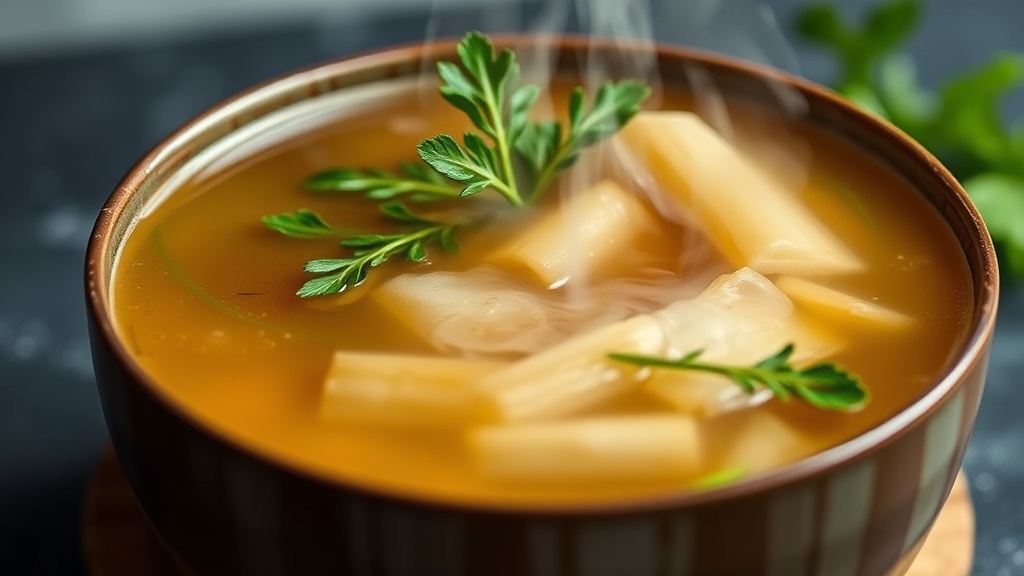
Why Does My Vegetable Stock Taste Like Dishwater? Building Layers in Your Plant-Based Broths

You're standing over the stove, ladle in hand, and the stock you've been simmering for three hours smells like hot celery and regret. The color's pale. The flavor's flat. And you're wondering — what do restaurants know that you don't? That sad, one-note liquid isn't just disappointing. It's a missed opportunity. Because a truly great vegetable stock isn't an afterthought — it's the invisible backbone of soups, stews, risottos, and sauces that separate home cooking from restaurant-caliber dishes.
The truth? Most home cooks treat vegetable stock like a dumping ground for wilted produce. That mindset produces exactly what you'd expect — muddy, unfocused flavors that drag down everything they touch. Professional kitchens approach stock with intention. They build it layer by layer, understanding how vegetables release their essence at different rates. They know that timing matters as much as ingredients. And they never — never — let a pot boil.
What Vegetables Actually Belong in a Proper Stock?
Here's where opinionated cooks start arguing. The classic French mirepoix — onions, carrots, celery — forms the foundation for good reason. These three vegetables provide sweetness, depth, and aromatic backbone without dominating. But that's just the starting point. The real character comes from your strategic additions.
Mushrooms (dried or fresh) add meaty savoriness that compensates for the lack of bones. A handful of dried porcini or shiitake transforms water into something you actually want to taste. Tomatoes contribute acidity and umami richness — even a tablespoon of tomato paste, caramelized in the pot before adding water, deepens the color dramatically. Fennel brings subtle anise notes that brighten heavy winter soups. Leeks, cleaner and sweeter than onions alone, add elegance you can't achieve with yellow storage onions by themselves.
Now — what to avoid. Brassicas are the usual suspects for ruining stocks. Cabbage, broccoli, cauliflower, and kale turn bitter and sulfurous when simmered too long. They don't just taste bad — they make your entire kitchen smell like overcooked school cafeteria vegetables. Starchy vegetables like potatoes and winter squash cloud the liquid and create murky, gluey results. Beets will turn everything magenta (unless that's your intention). And save your asparagus ends and artichoke trimmings for compost — they bring aggressive, muddy flavors that dominate everything else.
Fresh herbs should be added with restraint. Parsley stems (not the leaves — they turn bitter) provide clean, grassy notes. Thyme and bay leaves are classics for reason. But soft herbs like basil, cilantro, or dill? They lose all their volatile oils within minutes of simmering, leaving behind vegetal sadness. Save those for garnishing the finished dish instead.
Why Does Simmering Temperature Matter More Than You Think?
This is where most home stocks fail — and it's entirely preventable. Boiling is the enemy of clarity and subtlety. When stock boils vigorously, vegetables break down too quickly, releasing starch and particles that cloud the liquid. Worse, boiling drives off the volatile aromatic compounds you're trying to capture. You literally smell your flavor escaping into the air.
The goal is the barest shimmer — what French cooks call a frisson, just below a simmer. Tiny bubbles should occasionally break the surface, but the liquid shouldn't roll or churn. At this temperature, flavors extract gently and gradually. Vegetables surrender their essence without disintegrating. The resulting stock remains clear enough to see through — a visual indicator of proper technique.
Start your stock in cold water, not hot. Hot water "shocks" the vegetables, causing the exterior to cook too quickly while the interior remains raw. Cold water allows for even, gradual heating. Skim the surface obsessively during the first thirty minutes — that foam and scum contains proteins and impurities that will muddy your final result if incorporated. A lazy skim here means cloudy stock later.
Timing depends on your ingredients. All-vegetable stocks need 45–90 minutes of gentle simmering. Beyond that, you're not extracting more flavor — you're breaking down cellular structure and releasing bitterness. Stock with dried mushrooms can go slightly longer (the mushrooms need time to fully rehydrate and release their glutamates). But that six-hour stock your grandmother swore by? It's likely over-extracted, bitter, and murky. Trust your taste, not the clock.
How Can I Store and Use Stock Without Waste?
Here's a practical reality: you won't use a full pot of stock immediately. Professional kitchens make stock daily because they move volume. Home cooks need strategies for preservation that maintain quality. Ice cube trays are the secret weapon — freeze stock in one-ounce portions, then transfer to freezer bags. Need two tablespoons for a pan sauce? Grab two cubes. Making soup for four? Use a dozen. No defrosting entire containers for small jobs.
For larger quantities, freeze in quart containers with headspace (liquid expands when frozen — burst containers are depressing). Label with the date and contents — "mushroom stock" looks identical to "standard vegetable stock" after three months in the freezer. Frozen stock maintains quality for about six months, though it's safe indefinitely. The flavor simply fades over time.
Don't overlook reduction as a storage strategy. Reduce your stock by half — or even to a glace (syrupy concentrate) — and freeze in small portions. Reconstitute with water when needed. This saves enormous freezer space and actually improves flavor concentration. A tablespoon of vegetable glace transforms a pan of sautéed mushrooms into something restaurant-worthy.
Using stock strategically matters too. Water is fine for boiling pasta — you're dumping that liquid anyway. But risotto? That absorbing liquid becomes the dish — use your best stock. Pan sauces? Stock provides the fond-dissolving liquid that carries all the caramelized flavor from seared vegetables or plant-based proteins. Soups and braises are obvious candidates, but consider using stock to cook grains (farro, barley, freekeh) for built-in flavor that needs no additional dressing.
Building Your Personal Stock Formula
After you've mastered the basics, develop your signature approach. Some cooks add kombu for seaweed depth. Others include nutritional yeast (though this can make stock cloudy — add it to finished dishes instead). Citrus zest — added in the final ten minutes only — brings brightness that lifts heavy winter vegetable combinations. Whole spices (black peppercorns, coriander, fennel seed) toast in the dry pot before adding vegetables and water, releasing essential oils that permeate the final liquid.
Your stock should reflect your cooking style. If you make lots of Asian-influenced dishes, add ginger, garlic, and dried shiitake. For Mediterranean cooking, include fennel, tomato, and plenty of parsley stems. Mexican-inspired kitchens might add dried chiles, cumin, and oregano. The base technique remains constant — the flavor profile adapts to your needs.
Record what works. Keep a kitchen notebook (or phone notes) tracking combinations, timing, and results. That mushroom-leek-tomato stock that made the perfect risotto last month? Write it down. Stock-making rewards repetition and refinement. Your tenth batch will be noticeably better than your first — and your hundredth will be something you're genuinely proud to serve.
"A stock is the liquid in which something has been cooked — a liquid that, as a result, contains some of the substances that were in that something." — James Beard
The quote seems obvious, but Beard's point is subtle. Stock isn't just flavored water — it's a concentration of vegetable essence. Treat it with respect. Don't rush it. Don't boil it. And never, ever throw limp produce into a pot and expect magic. The best vegetable stock comes from vegetables you'd happily eat on their own — just extracted, gently, into liquid form. That's the difference between dishwater and the foundation of memorable meals.
For deeper understanding of flavor development in plant-based cooking, consult the Serious Eats guide to vegetable stock. The Food & Wine vegetable stock technique offers additional professional insights on timing and temperature control. For scientific background on how vegetables release flavor compounds during cooking, refer to Cook's Illustrated research on broth construction.