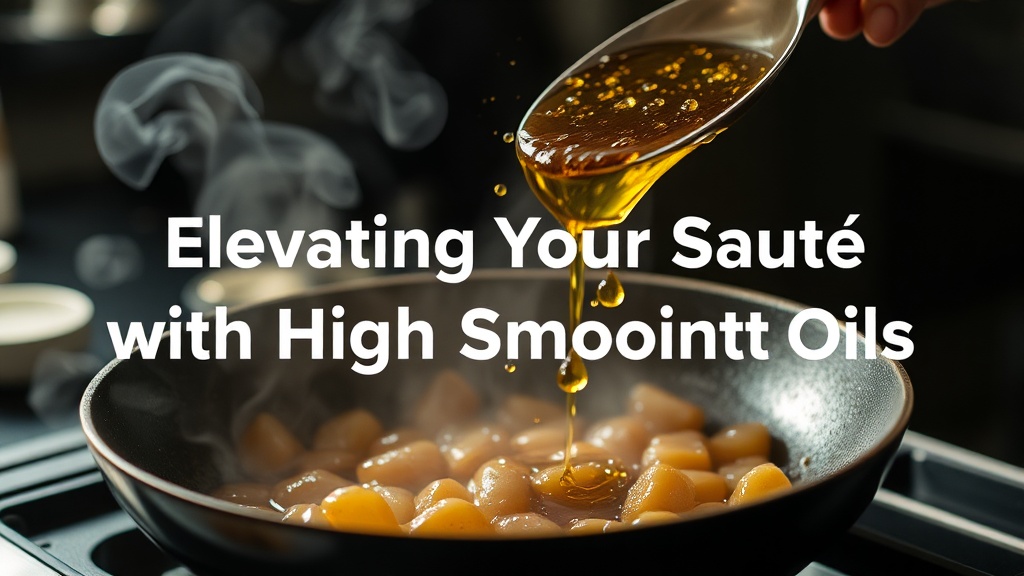
Elevating Your Sauté with High Smoke Point Oils

Quick Tip
Always match your oil to your cooking temperature to prevent oxidation and bitter flavors.
Imagine a pan of garlic and kale hitting a hot skillet, only to be met with a cloud of bitter, acrid smoke that lingers in the kitchen for hours. That's the result of using the wrong oil for high-heat cooking. This post breaks down why smoke points matter and which fats you should keep in your pantry for a perfect sauté.
What is a Smoke Point?
A smoke point is the temperature at which an oil stops shimmering and starts to break down, producing smoke and an unpleasant odor. When an oil reaches this point, it doesn't just taste bad—it can actually become unhealthy. If you're searing vegetables or tofu, you need an oil that can handle the heat without turning bitter.
Most people reach for extra virgin olive oil for everything, but that's a mistake for high-heat sautéing. Extra virgin olive oil has a lower smoke point (around 375°F or 190°C) compared to refined versions. If you push it too far, you'll notice a scorched flavor that ruins the dish.
Which Oils Are Best for High-Heat Sautéing?
High-smoke point oils like avocado oil, refined coconut oil, and grapeseed oil are your best bets for intense heat. These fats remain stable even when the pan is ripping hot. It's a small detail, but it makes a massive difference in the final texture of your food.
Here is a quick reference for common cooking fats:
| Oil Type | Approx. Smoke Point | Best Use Case |
|---|---|---|
| Avocado Oil | 520°F (271°C) | High-heat searing and roasting |
| Grapeseed Oil | 420°F (216°C) | General sautéing and stir-frying |
| Refined Coconut Oil | 400°F (204°C) | Vegan baking and medium-heat cooking |
| Extra Virgin Olive Oil | 375°F (190°C) | Finishing dishes or low-heat cooking |
I personally rely on Chosen Foods Avocado Oil when I'm making a quick stir-fry because it handles the heat without any drama. It's much more forgiving than trying to use a delicate oil that burns at the first sign of a hot pan.
How Can You Prevent Oil from Burning?
You can prevent oil from burning by monitoring your pan temperature and choosing the right fat for the job. If you see wisps of smoke rising from the pan before you even add your ingredients, the oil is already too hot (and likely degrading).
If you're working on more complex flavors, you might want to check out my previous post on perfecting plant-based umami. Using a high-smoke point oil ensures those savory flavors from miso or nutritional yeast aren't masked by the taste of burnt fat.
A quick tip: if you're unsure about the stability of a specific fat, you can check the Wikipedia entry on smoke points for a deep dive into the chemistry of lipid oxidation. It's helpful to know that refined oils—those that have undergone a process to remove impurities—generally have much higher thresholds than unrefined, "cold-pressed" varieties.
Don't let a bad oil choice ruin a good meal. Keep a bottle of avocado oil or grapeseed oil nearby, and your sautéed greens will taste much cleaner.